Architectural strategies for engaging communities, shaping public value, and delivering meaningful civic and shared spaces.
Course Summary:
Architecture does not exist in a vacuum. While a traditional client brief dictates the functional, aesthetic, and financial parameters of a project, the true impact of a building extends far beyond its property lines. This course challenges students to step outside traditional architectural problem-solving to explore the profound social, cultural, and ethical impacts of the built environment.
Course Description:
Who is architecture really for? How do the spaces we design influence human behavior, community cohesion, and social equity? Beyond the Client Brief is an interdisciplinary seminar and design-thinking course that investigates the hidden social dimensions of architecture and urban design.
Moving past the demands of the immediate client, this course asks students to consider the "unseen clients"—the public, the marginalized, and the local community. Through a blend of theoretical readings, real-world case studies, and community-engaged projects, students will examine how architectural decisions can either reinforce systemic inequalities or foster spatial justice. Topics will include the politics of public space, the mechanisms of gentrification and displacement, participatory design processes, and the role of the architect as an advocate.
Ultimately, this course empowers future architects, urban planners, and designers with the critical tools needed to create spaces that are not only beautiful and functional, but socially responsible and deeply connected to the human experience.
Key Topics Covered:
Who Should Take This Course:
This course is highly recommended for undergraduate and graduate students in Architecture, Urban Design, City Planning, Landscape Architecture, and Environmental Sociology. It is ideal for creative thinkers who want to use design as a tool for positive social change.

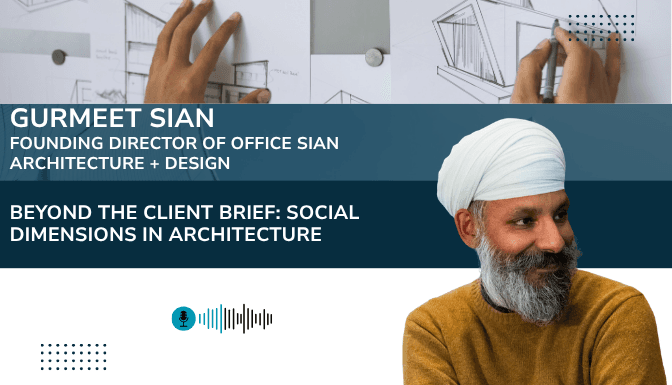
Founding Director | Office Sian Architecture + Design
Gurmeet Sian is the founding director of Office Sian Architecture + Design, based in London. Working with a variety of clients, from families to communities to local boroughs in developing their relationship with the built environment. Exploring the idea of 'dwelling', whether it is for a single person, or a community organisation, is the foundation of his work. Gurmeet is a Mayor’s Design Advocate, a member of the Redbridge, Harrow and Camden Design Review Panel. He is also the Chair of the Southwark Community Design Review Panel. He has been the recipient of the RIBA London Project Architect of the Year award.
