Practical approaches to creating healthier, more inclusive buildings through human-centric architectural design
Designing buildings that actively support mental wellbeing and inclusion has become a critical professional responsibility for UK architects, shaped by growing evidence, policy focus, and societal expectations. As practices respond to sustainability, social value, and post-pandemic patterns of use, architects are increasingly expected to demonstrate how design decisions affect human experience as well as environmental performance.
This course explores how architecture can positively influence mental health, wellbeing, and inclusion across a range of building types and scales. Drawing on research, professional guidance, and built examples, it examines how factors such as spatial layout, access to nature, sensory conditions, control, and social interaction can be intentionally designed to support diverse users.
Participants will gain practical insight into embedding wellbeing and inclusion into everyday design processes, briefing, and decision-making. The session focuses on realistic interventions that can be applied within commercial constraints while strengthening design quality, client value, and professional accountability.
By the end of this course, you will be able to:

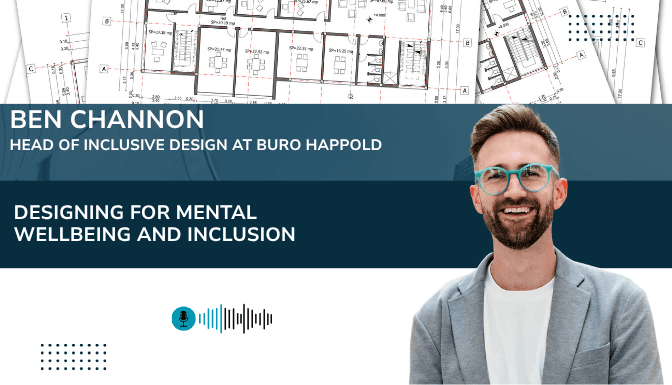
Head of Inclusive Design | Buro Happold
Ben is an architect, author, TEDx speaker and mental wellbeing advocate, and is well known in the industry as a thought leader in designing for happiness and wellbeing. In his role as Head of Inclusive Environments he helps clients and design teams to create buildings and cities that truly consider the needs of everybody, with the firm belief that more inclusive places benefit all of us. Ben developed an interest in design for mental health, wellbeing and happiness after suffering with anxiety problems in his mid-twenties. This led him to research the relationship between buildings and happiness, which formed the basis of his first book: ‘Happy by Design’. Ben’s second book ‘The Happy Design Toolkit’ – which offers more practical advice on how to create buildings for our mental wellbeing – was published in March 2022. Ben now speaks on this subject to organisations and universities around the world. Ben qualified as WELL Accredited Professional in 2018, broadening his knowledge to encompass design for physical wellbeing. From 2020-2023 he formed part of the WELL Mind Advisory panel, using his expertise to raise the bar for healthy buildings worldwide. In 2017 Ben co-founded the Architects’ Mental Wellbeing Forum, which is focused on improving mental health within the industry. He is also an accredited mindfulness practitioner with the Mindfulness Association, and is interested in how buildings can help all of us to be more mindful and present every day.
