Master the essential calculations for balancing earthwork on any project. Learn to optimize cut and fill volumes to reduce costs and avoid common pitfalls.
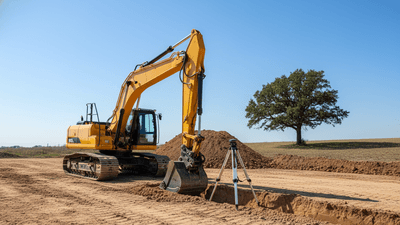
Master the essential techniques for calculating soil volumes in cut and fill operations. This course, "How to Calculate Soil Volumes for Cut and Fill," provides a comprehensive understanding of earthwork principles, vital for civil engineers, landscape architects, contractors, and project managers.
From understanding topographical analysis and grade stakes to navigating the complexities of soil mechanics and material properties, this program equips you with the knowledge to accurately estimate, plan, and execute earthmoving projects. You'll explore the critical role of soil characteristics like swell and shrinkage in volume calculations and learn how to apply both traditional hand calculations and modern computational methods. The course also delves into practical considerations such as equipment selection, mass haul diagrams for optimizing material movement, and strategies for balancing sites to minimize costs and environmental impact.
Key learning outcomes include:
Gain the skills to manage earthwork projects with precision, ensuring profitability and adherence to design specifications.

Online Courses for Engineers
HalfMoon Education is a nonprofit continuing education provider offering live webinars and on-demand courses for engineers, architects, landscape architects, land surveyors, attorneys, paralegals, accountants and others. Since 1996, we’ve helped thousands of professionals nationwide stay current with industry standards and codes, earn CE hours, and advance their expertise through practical, expert-led learning experiences. Learn more about us at: www.halfmoonseminars.org

Project Manager with The Gateway Engineers, Inc., in Pittsburgh
Mr. Messmer has over 30 years of engineering experience in analysis, design, plan/specification development, and project management/personnel supervision for geotechnical, foundation and structural engineering projects in the transportation, industrial, municipal and commercial fields of civil engineering. Throughout his career he has placed an emphasis on quality control and staff training. Mr. Messmer is a member of the American Society of Civil Engineers, the American Concrete Institute, the American Society of Highway Engineers and the Society of American Military Engineers. He earned his B.S. degree in Civil Engineering from the University of Pittsburgh. Mr. Messmer was accepted into the Academy of Geo‐Professionals in 2013.
