Master in-place pavement recycling for cost-effective, sustainable road networks. Optimize design and construction techniques for superior performance and reduced environmental impact.
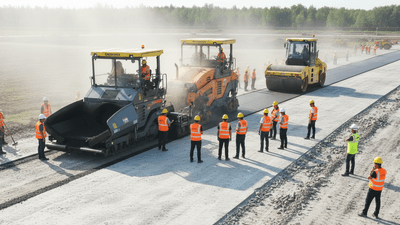
This course explains the process, potential, versatility, and benefits of in-place pavement recycling. Three main types of in-place recycling will be discussed while also using the idea of the "urban quarry" to demonstrate the potential of recycling pavements that have already been used and the sustainability and environmental impacts. Cost alternatives, design optimization, and field conditions are identified to consider versatility.
Key learning outcomes include:
Whether you're contending with an underfunded road network, aiming to boost structural capacity, or committed to reducing your carbon footprint, this workshop provides practical strategies and proven techniques. Move beyond traditional "remove and replace" methods and embrace the future of pavement engineering with in-place recycling.

Online Courses for Engineers
HalfMoon Education is a nonprofit continuing education provider offering live webinars and on-demand courses for engineers, architects, landscape architects, land surveyors, attorneys, paralegals, accountants and others. Since 1996, we’ve helped thousands of professionals nationwide stay current with industry standards and codes, earn CE hours, and advance their expertise through practical, expert-led learning experiences. Learn more about us at: www.halfmoonseminars.org
Engineer at California Nevada Cement Association
Mr. Slocum joined CNCA as the Northern California/Northern Nevada pavements engineer in January 2014 and is based in Chico, California. He provides technical expertise, education, concrete resources, and several other services to municipalities, engineers, and developers to advance the applications and use of concrete for streets, local roads, and parking areas. Mr. Slocum specializes in conventional concrete, concrete overlays, roller-compacted concrete, and pervious concrete, but is knowledgeable on most concrete-related applications. He is active in local societies including ASCE, ACI, SNCA, CalGeo, and EBME (where he is the outgoing co-chair). Prior to joining CNCA, Mr. Slocum worked as a geotechnical consulting engineer in Walnut Creek, California. He graduated from the University of the Pacific with a Bachelor’s degree in Civil Engineering and a minor in Engineering Management before continuing his education at U.C. Berkeley where he obtained his Master’s degree in Civil Engineering. Mr. Slocum is a licensed civil engineer in the state of California and is certified by ACI.
Director of Business Development, Pavement Recycling Systems
Mr. Estrada is the Director of Business Development for Pavement Recycling Systems of California. Mr. Estrada is a graduate of the University of Texas at Austin, School of Engineering. He is an Industry Co-Chair for the Caltrans Pavement & Materials Partnering Committee (PMPC), as well as the Green Book Stabilized Base Task Force. For over 30 years, he has been involved in both the engineering and construction industries in the implementation of soil stabilization and asphalt recycling engineering strategies.
Professional Engineer, Pavement Recycling Systems, Inc
Mr. Concannon is a registered Professional Engineer in California and Nevada, and has been with Pavement Recycling Systems, Inc. in various roles since 2015, including Project Engineering, Project Management, Operations Management, and Research and Development. Currently, he works in Market Development and Operational Support for all recycling divisions at Pavement Recycling. Mr. Concannon also currently serves on several working groups within the Caltrans Pavement Materials Partnering Committee (PMPC) and is the Vice President of the Recycling and Stabilization Association of California (RSA). Prior to coming to Pavement Recycling, Mr. Concannon worked in the Geotechnical Engineering field for a consulting firm in the Silicon Valley area. He graduated with a B.S. in Civil Engineering from California Polytechnic State University, San Luis Obispo in 2013.
