Explore innovative urban planning strategies to build sustainable, future-proof communities that prioritize human well-being and adapt to modern environmental challenges.
Urban planning and design form the foundation of every thriving community, defining the health, livability, scalability, and long-term resilience of the spaces we inhabit. Yet many public health challenges, economic inefficiencies, and multi-trillion-dollar infrastructure losses can be traced back to a reliance on expired or static data, poorly managed spatial assumptions, or failures to properly adapt regulatory plans to the fluid evolution of modern cities.
In this practical session, urbanist and deep-tech veteran Silviu Pirvu provides a high-level overview of modern, data-driven spatial design, explaining how human-centric cities are built from the ground up, the integration of advanced satellite imagery and sensor technology to close information gaps, and the five-dimensional planning frameworks used to manage changing temporal scenarios and community aspirations. Through practical examples and industry insights, participants will gain a clearer understanding of how resilient urban systems operate in practice and how adaptive, live planning documentation can help reduce urban sprawl, mitigate environmental costs, and improve public health outcomes.
Key Topics Discussed:
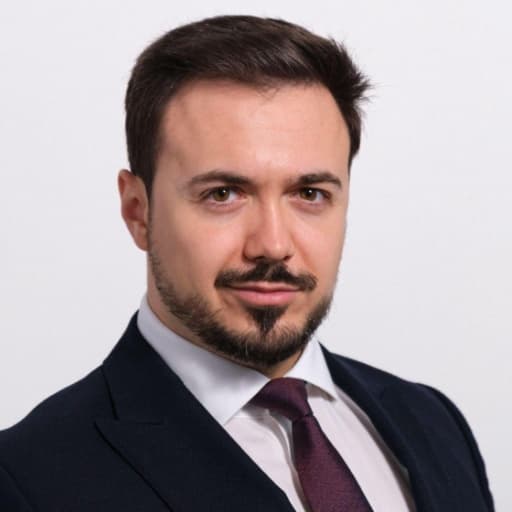
Chairman & CTO | Optimal Cities
Silviu Pirvu is a Chief Technology Officer, DeepTech entrepreneur and urbanist focused on developing planetary intelligence companions that help greenify the world and create healthy and prosperous places on Earth and beyond. His 'Symbiotic Intelligence' approach uses harmonious integration of Nature with Artificial and Human Cognition systems for optimal decision-making to thrive in dynamic environments, especially in megacities, space, and extreme conditions. Known for his dedication to preparing humans for life beyond Earth, he is a recurrent speaker at urban innovation, cognition, healthcare and space-related events across the globe. He has over 20 years of combined experience in city planning, Earth observation, space expansion, digital innovation, TV, radio and extreme performances. Silviu Pirvu is a London-based Fellow of the Royal Society of Arts, Manufacture and Commerce, a Member of the European Centre for Space Economy and Commerce and an experienced domain expert and mentor for tens of SpaceTech, DeepTech and ClimateTech initiatives across Europe, Asia, MENA and Americas.
