From planning to power-up, master the design and deployment of EV charging facilities, navigating technical specs, site selection, and utility coordination for a sustainable future.

Unlock the essentials of Electric Vehicle (EV) charging infrastructure with "How to Design Electric Vehicle Charging Facilities." This comprehensive course, led by an expert with extensive experience at Tesla and SRD Consulting, delves into the critical aspects of designing, installing, and maintaining EV charging stations. You'll gain a deep understanding of the rapidly evolving EV landscape, the diverse types of electric vehicles, and the driving forces behind transportation electrification, including air quality concerns and renewable energy integration.
The course meticulously covers the two primary levels of charging infrastructure:
Through detailed schematics, real-world examples, and insightful discussions, you will learn about the different connector types (SAE J1772, CHAdeMO, CCS Combo 1, and Tesla's proprietary connector), their compatibility, and design implications. The course also addresses crucial cost considerations, payment mechanisms, maintenance responsibilities, and the importance of integrating safety features, signage, and lighting into your designs. Furthermore, you’ll explore complementary technologies like battery storage and solar integration, and understand the policy landscape, including EV readiness codes and make-ready programs. By the end of this course, you will be equipped with the knowledge and tools to confidently design efficient, compliant, and future-proof EV charging facilities.

Online Courses for Engineers
HalfMoon Education is a nonprofit continuing education provider offering live webinars and on-demand courses for engineers, architects, landscape architects, land surveyors, attorneys, paralegals, accountants and others. Since 1996, we’ve helped thousands of professionals nationwide stay current with industry standards and codes, earn CE hours, and advance their expertise through practical, expert-led learning experiences. Learn more about us at: www.halfmoonseminars.org
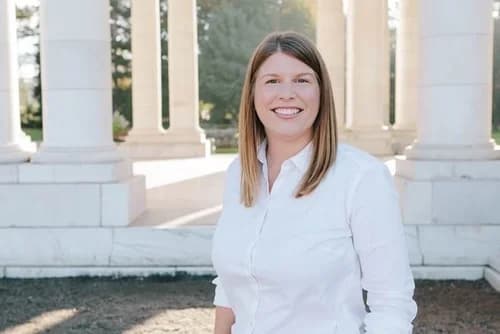
Founder + CEO | S.R.D. Consulting, LLC
A champion of emerging innovative land uses, Ms. Davis has spent over a decade paving the way for integrating technology and sustainability into our urban, suburban, and rural fabrics. Founder and CEO of S. R. D. Consulting – Sustainable. Renewable. Driven. (SRDC), she leverages her experience in the renewable energy and electric vehicle sectors to advance the clean electrification of our grid and transportation systems. Under her leadership, SRDC is committed to infusing sustainable and equitable approaches into regulations, crafting meaningful relationships built on mutual trust and respect with communities, and developing clear, intuitive, and approachable programs + plans. A land use planning firm based in Denver, Colorado, SRDC is focused on advancing sustainable and zero emission projects and plans. In 2020, SRDC had a banner year, including leading the Gold Hill Resilient Renewable Energy Design Project in Boulder County, Colorado, and the Town of Estes Park, Colorado’s Electric Vehicle Infrastructure and Readiness Plan which was recently adopted by the Town Board of Trustees. SRDC was lead project manager and author of the plan. Prior to pursuing her entrepreneurial aspirations and launching SRDC, she led an interdisciplinary team as Tesla’s Market Lead for EV Infrastructure, developing and deploying over 500 Level 2 & 3 (DC‐fast charging) connectors throughout the US. During her tenure, she guided the company’s overall EV charging strategy throughout the Midwest and West using a regional and local approach as well as managed partnerships with private landowners and utilities. SRDC has deep roots within the solar sector, building off of her work as a project planner for Boulder‐based juwi solar, Inc. where she led the due diligence and entitlement effort for utility‐scale solar PV projects, installing over 250MW of solar nationwide. SRDC’s connections to the solar and emerging energy storage sectors have allowed her to apply lessons learned from integrating into larger utility and local energy generation and demand planning. Ms. Davis frequently meets with citizens and speaks with groups about EVs, renewable energy, battery storage, and other carbon‐free transportation alternatives including micromobility and transit. Her personal car‐free lifestyle brings an authenticity to her work in this space. She is a twice graduate from Virginia Tech (Go Hokies!) holding a master’s career of Urban and Regional Planning and a bachelor’s degree in Public and Urban Affairs, Environmental Affairs. She currently serves as an advisor to the Department of Energy funded Solar@Scale initiative, is the Micromobility Subgroup co‐chair for the Colorado Electric Vehicle Coalition, a member of the American Planning Association and a member of the American Institute of Certified Planners (AICP). Ms. Davis speaks regularly at urban planning, transportation, sustainability, and renewable energy conferences. In her free time, she enjoys Colorado’s year‐round outdoor recreation with her wife and their senior Jack Russell mix Maggie, including hiking, biking, snowshoeing, skiing, paddle boarding, and swimming.
