Design and build resilient, ultra-low energy buildings. Master Passive Building principles, standards, and practices for a sustainable future.
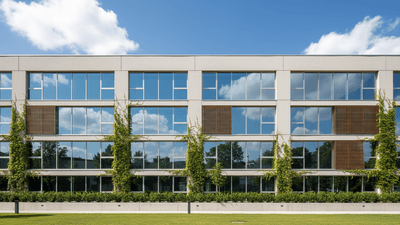
This course focuses on the goals, potential, principles, and certifications of passive building design. The course begins by explaining the role of decarbonization and the development of building and energy codes before diving into the science of heat and moisture transfer in buildings and how to control them with mechanical systems and designs. The course shifts into a discussion on the requirements of various certifications and
programs and concludes with various detailed case studies.
Key learning outcomes include:
Whether you're an architect, engineer, builder, or simply passionate about sustainable design, this course provides the essential knowledge and practical skills to design, construct, and certify high-performance passive buildings.

Online Courses for Engineers
HalfMoon Education is a nonprofit continuing education provider offering live webinars and on-demand courses for engineers, architects, landscape architects, land surveyors, attorneys, paralegals, accountants and others. Since 1996, we’ve helped thousands of professionals nationwide stay current with industry standards and codes, earn CE hours, and advance their expertise through practical, expert-led learning experiences. Learn more about us at: www.halfmoonseminars.org
Associate Director and a Technical Lead for Phius
Ms. White has been with Phius since 2012. Ms. White led the building certification review team for seven years and is an instructor for Certified Passive House Consultant (CPHC®) training and WUFI® Passive energy modeling software training. She holds a degree in Environmental Sustainability with a minor in Architecture from the University of Illinois at Urbana-Champaign, and a Master’s in Energy Engineering from the University of Illinois at Chicago. Ms. White has a strong understanding of high-performance building design and how this is integral to the transition to a renewable energy grid. Her Master’s thesis posed the question “What do Net Zero Buildings Cost the Grid?”, combining the concepts behind how building loads are shaped, how design techniques can alter that shape, and how that ultimately impacts the electricity generation resources needed to meet the load – all while considering the shift to more intermittent, renewable energy resources. Ultimately, this research concludes that energy conservation and demand response in buildings is a critical up-front investment to facilitate this transition.
Certified Passive House Consultant at Phius
Mr. Loercher joined the Phius certification team in 2021. He provides design review, updates the existing Certified Passive House Consultant (CPHC®) training curriculum, and helps expand the advanced training offerings at Phius. Prior to joining the certification team, Mr. Loercher has been an active CPHC since 2016 and has certified all building types ranging from single-family and multifamily residential, commercial, new construction, and retrofits. He is a Certified Passive House Consultant and holds a Master of Architecture from Parsons the New School for Design. He is currently on the advisory board of the Phius Alliance – Hudson Valley chapter and serves as the Secretary and Northeast Regional Representative for the national Phius Alliance chapter.
Principal of Passive Energy Designs LLC
Mr. Abendroth is an experienced CPHC® (Certified Passive House Consultant) and the former Certification Manager at Phius. He has worked on hundreds of passive house projects including small residential designs and student projects to mid-sized commercial and non-profit developments, and he has been at the forefront of research and design in passive houses for almost a decade. Mr. Abendroth’s first passive house experience was with Team Illinois in the U.S. Department of Energy's Solar Decathlon Competition in 2009, where the team took second place overall. He is a member of the Phius Technical Committee and a trainer for the Phius CPHC Training Program, the Phius+ Rater Program, and advanced tutorials on topics related to passive building construction. Mr. Abendroth also serves as the Principal of Passive Energy Designs LLC, a St. Louis, Missouri-based consulting firm specializing in building high-performance and low-energy buildings that meet the passive house standard. He holds a Master of Architecture and a Bachelor of Science in Architectural Studies from the University of Illinois at Urbana-Champaign. Currently, Mr. Abendroth is a lecturer at the Sam Fox School of Design and Visual Arts at Washington University in St. Louis where he teaches both graduate and undergraduate courses focused on the impacts of climate, site, energy, detailing, and building information modeling (BIM) on the built environment. Previously he taught at the Rhode Island School of Design as both a Visiting Lecturer and Critic and has acted as a passive house consultant for Kansas University’s 5th year design-build program, Studio 804.
