Master essential timber framing principles to confidently build safe, durable structures. Elevate your construction expertise with proven methods for homes and small businesses.
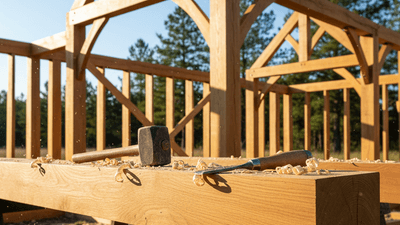
Welcome to Residential and Small Commercial Timber Frame Construction, a comprehensive course designed to bridge the gap between traditional woodworking craftsmanship and modern structural engineering. Timber framing is a time-honored building method that has evolved significantly, transitioning from historic utilitarian structures to highly sought-after architectural centerpieces in both residential and light commercial projects. This course provides architects, engineers, and builders with the critical knowledge needed to successfully design, analyze, and construct efficient and aesthetically striking timber frames while navigating modern building codes and hybrid material integration.
Throughout this program, you will be guided through the entire lifecycle of a timber frame project. You will explore the foundational principles of timber frame design, starting with the selection of regional wood species, understanding the nuances between green and kiln-dried timber, and managing natural material behaviors like shrinkage and checking. From there, the course dives deep into structural analysis, offering practical methodologies for evaluating heavy timber trusses, bent frames, and wall frames. You will learn how to accurately resolve lateral and gravity loads, calculate joinery capacities in both tension and compression, and avoid critical structural pitfalls such as horizontal shear failure.
Key topics covered in this course include:
By the end of this course, professionals will possess a robust understanding of the symbiotic relationship between a building's floor plan, its load paths, and its structural envelope. Whether you are an architect designing a complex roof system, an engineer calculating the bearing capacity of a critical joint, or a general contractor coordinating a safe site raising, this course will equip you with the practical tools and confidence to deliver structurally sound, code-compliant, and beautifully crafted timber frame buildings.

Online Courses for Engineers
HalfMoon Education is a nonprofit continuing education provider offering live webinars and on-demand courses for engineers, architects, landscape architects, land surveyors, attorneys, paralegals, accountants and others. Since 1996, we’ve helped thousands of professionals nationwide stay current with industry standards and codes, earn CE hours, and advance their expertise through practical, expert-led learning experiences. Learn more about us at: www.halfmoonseminars.org

Founder/Managing Owner of Slick Timberworks
Jeff began his construction and engineering career when he found a job as a timber frame carpenter after returning east, broke and jobless, from a winter chasing snow in Jackson Hole. This job of convenience led to over a decade of making sawdust, first as a joiner and then as an itinerant timber framer and small business owner—a career path that ignited a passion for woodworking and the pursuit of the historic craft. This interest was initially fostered by climbing around the bank barn of his childhood home in Bucks County, PA. A recession and a baby boy led to the decision to return to school to study civil engineering, broadening his understanding of structural analysis and material science. Upon graduating, he headed back to the building industry, first as a subcontracted drafter and engineering intern, then as a structural engineering project manager. After a handful of years of consulting engineering work for log and timber manufacturers throughout North America, the draw to return to the shop floor became too much to ignore, which led to the creation of Slick Timberworks and Engineering in the summer of 2020 in an effort to create a professional balance between structural analysis and timber fabrication. Jeff relies heavily on his practical experience while working with clients to produce structurally efficient and elegant designs, while remaining focused on the initial priorities of the project. Jeff has earned a B.S. in Geology from Bates College and a B.S. in Civil Engineering from the University of North Dakota.
