Master sustainable material selection for green buildings and enhance your design practices
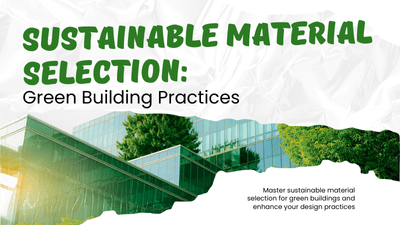
Sustainability in construction begins with thoughtful material selection. This course delves into the complexities of selecting green vernacular building materials, exploring how architects and designers can evaluate local and recycled options to achieve sustainability goals. Participants will gain insights into the Analytic Hierarchy Process (AHP) and other tools used to balance technical, environmental, and economic considerations during the material selection process. Case studies and examples highlight how integrating local resources can reduce carbon emissions, enhance building health, and foster community development.
Key takeaways include strategies for incorporating sustainability into design decision-making and frameworks for evaluating material trade-offs effectively. By the end of the course, attendees will be equipped with practical knowledge and actionable tools to prioritize sustainable materials in their projects.

Design Edge Institute provides CPD courses tailored for architects and urban planners who are committed to innovation and excellence in their field. Our curriculum covers emerging trends such as AI integration in design, eco-friendly building materials, and urban resilience planning. At Design Edge, we are dedicated to fostering creativity and technical expertise, ensuring our participants stay ahead in the ever-evolving architectural landscape.
Jerry Luo, PhD, PE, is a licensed professional engineer in Ohio, Louisiana, and Texas, with over 15 years of diverse experience spanning higher education, research, and consulting in civil engineering and construction management. Renowned for his expertise in geotechnical engineering, he has published over 60 peer-reviewed research articles, significantly contributing to advancements in geotechnical risk assessment and infrastructure resilience. He also co-authored a widely recognized textbook on soil dynamics. Jerry has actively contributed to the global engineering community by serving on the editorial boards of multiple international journals and as a member of organizing committees for prestigious conferences. His work bridges academic excellence and industry practice, making a tangible impact on critical engineering projects. His dedication to mentorship and innovation reflects his commitment to shaping the next generation of civil engineers and advancing the profession through research, education, and practice.
