LF logo
by learnformula
search
Log in
search
Courses/Engineering/Structural Engineering

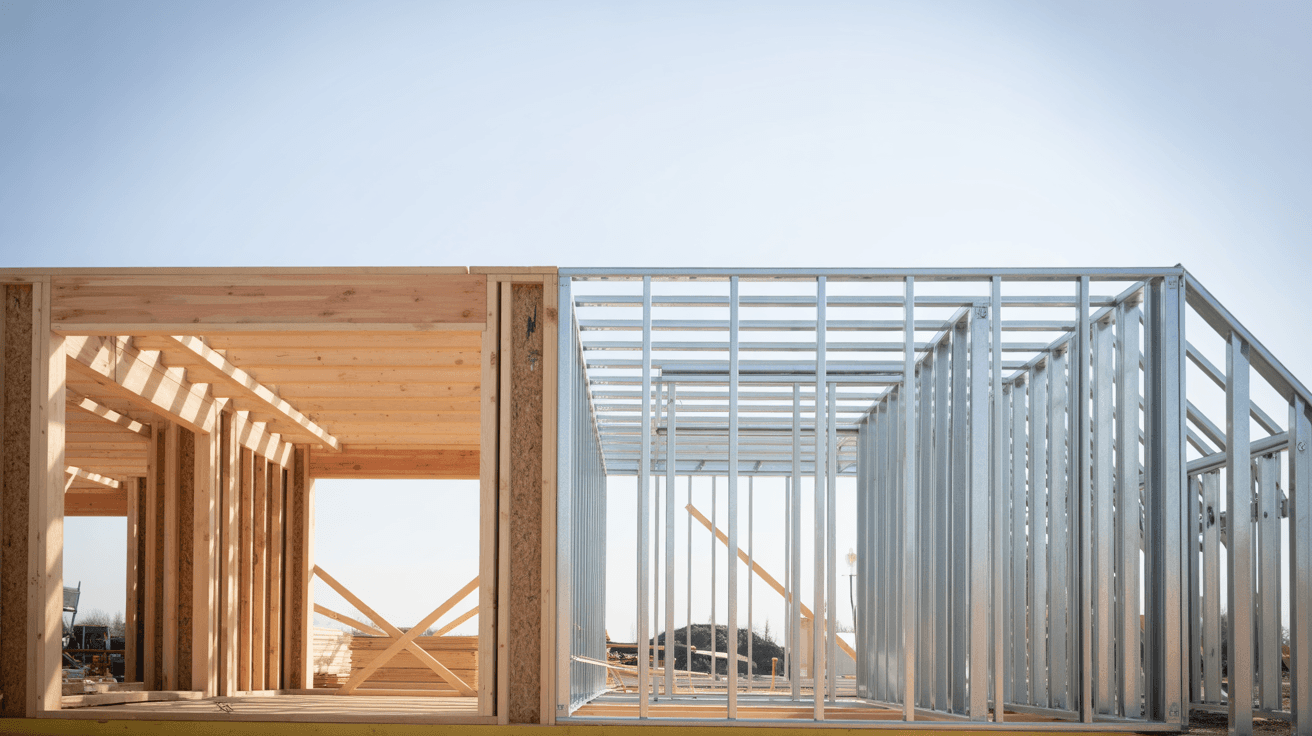
Wood & Cold-Formed Steel Frame Design & Construction

Master the design and construction of wood and cold-formed steel structures. Understand code essentials and advanced techniques for residential and commercial projects.
Created byHalfMoon Educationworkspace_premium
4.7
(7 reviews)
BeginnerUpdated Oct 21, 2025
Wood & Cold-Formed Steel Frame Design & Construction

What You'll Learn

check_circleUnderstand fundamental concepts of wood and cold-formed steel framing.
check_circleIdentify key design specifications and standards for both materials.
check_circleDistinguish between prescriptive and performance-based design approaches.
check_circleRecognize common framing components and their applications in construction.
check_circleEvaluate material properties and installation practices for structural integrity.

About This Course

Discover the essential principles of designing and constructing with wood and cold-formed steel frames, crucial for a wide range of buildings from residential to small commercial. This course delves into the unique historical and technical developments of these versatile materials.

  • Explore the historical evolution of wood as a building material, from early shelters to modern framing techniques, understanding how engineering principles and industry dynamics shaped its use and standardization.
  • Gain insights into the history of cold-formed steel, its emergence as a non-combustible alternative, and its increasing prevalence in modern construction, including light-frame residential structures.
  • Understand the rigorous processes behind wood standards and grading, influenced by physics, structural engineering, and economic factors, ensuring quality and reliability in wood construction.
  • Learn the fundamentals of cold-formed steel design, including the complexities introduced by local buckling and innovative design methods developed to address these challenges.
  • Examine the current building codes, particularly the International Residential Code (IRC) and International Building Code (IBC), to differentiate between performance-based and prescriptive design approaches for both wood and cold-formed steel.
  • Differentiate between the structural properties and applications of various engineered wood products, such as LVL and I-joists, and specialty cold-formed steel members, highlighting their advantages and limitations.
  • Analyze the practical considerations of integrating mechanical, electrical, and plumbing (MEP) systems within wood and cold-formed steel frames, focusing on best practices for achieving structural integrity and system functionality.
  • Consider the economic and practical implications of material selection, including cost-effectiveness, constructability, and long-term durability, to make informed design decisions for your projects.

By the end of this course, you will have a comprehensive understanding of wood and cold-formed steel, equipping you with the knowledge to approach design and construction projects with confidence and informed expertise.

Your Instructors

HalfMoon Education
HalfMoon Education

Online Courses for Engineers

menu_book128 courses
star792 reviews

HalfMoon Education is a nonprofit continuing education provider offering live webinars and on-demand courses for engineers, architects, landscape architects, land surveyors, attorneys, paralegals, accountants and others. Since 1996, we’ve helped thousands of professionals nationwide stay current with industry standards and codes, earn CE hours, and advance their expertise through practical, expert-led learning experiences. Learn more about us at: www.halfmoonseminars.org

Eugene Brislin
Eugene Brislin

Structural Engineer, Summerville, SC

Mr. Brislin has been a professional engineer for 32 years and has designed many structures and performed many different types of analysis in that time. He has worked for a steel fabricator, an architectural/engineering firm and a seismic consultant and has been in private practice over 25 years. Mr. Brislin earned his BSCE degree from The Citadel in Charleston, South Carolina, and his MSCE degree from the University of South Carolina. He has completed all his course work for his PhD degree but has not completed his dissertation. Mr. Brislin’s graduate study work has been in mathematical elasticity. He has worked on a wide variety of projects from arenas such as Gund Arena in Cleveland, Ohio, and the Edward Jones Arena in St. Louis, Missouri, to renovation and seismic retrofit of the South Carolina State House and the design of the Columbia South Carolina Museum of Art. Mr. Brislin has done stress analysis on weapons systems for the Department of Defense and has consulted on cellular telephone concealment projects. His company routinely provides design for residential structures due the high wind and seismic requirements in his local area and cold form steel design for small commercial structures and cold formed steel shop drawings for larger structures

Credit Information

What Students Are Saying

4.7
Student's Choice
7 reviews

Frequently Asked Questions

We are a registered provider with 327+ associations and regulatory bodies worldwide. We operate across 29 global markets including Canada, the US, Australia, and the UK. Every course page clearly displays its specific accreditations. Upon completion, you receive a professional certificate that can be validated online. Our certificates include all necessary accreditation details, credit hours, and completion dates, and are formatted specifically to meet the submission requirements of most global regulatory bodies.